Right now, somewhere in your body, a cell is dying — and that's completely normal. Every day, your body replaces roughly one to two percent of its cells. By the time a year has passed, a huge portion of the "you" made of cells is technically new.
Cells have an expiration date on purpose
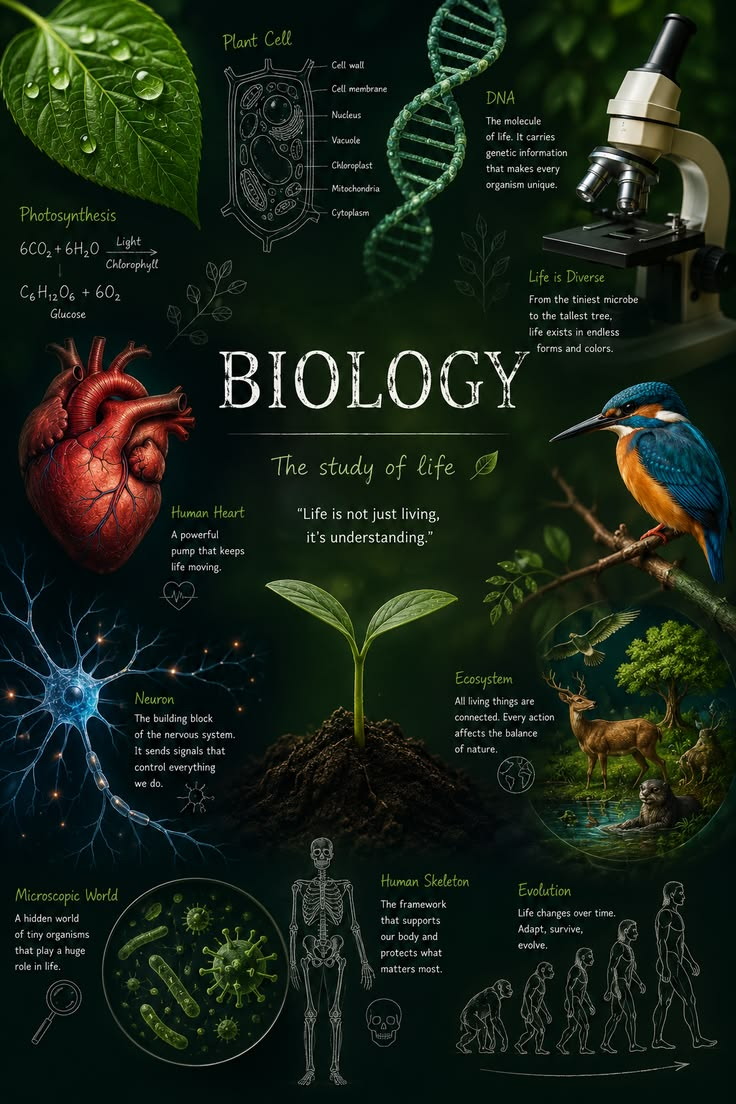
It might sound alarming, but planned cell death is a feature, not a bug. It's called apoptosis, and it's how your body clears out damaged, old, or no-longer-needed cells before they cause problems. Skin cells, for example, are constantly shed and replaced — which is part of why a scrape on your arm eventually looks like it never happened.
Stem cells: the body's replacement parts department
So who replaces all these dying cells? Mostly, stem cells. These are unspecialized cells that can divide and turn into more specific cell types depending on what the body needs — new blood cells, new skin cells, new cells lining your gut. Different tissues keep their own local stock of stem cells on standby for exactly this purpose.
Bone marrow is one of the busiest examples: it produces about two million new red blood cells every single second, replacing old ones that have simply worn out after about four months of carrying oxygen around your body.
Not everything repairs the same way
Repair capacity isn't equal everywhere. Skin and blood renew constantly. Your liver can regenerate a surprising amount of lost tissue. But some cells, like most neurons in your brain, are largely the same ones you'll have for life — which is part of why brain and spinal cord injuries are often so much harder to recover from than a cut on your hand.
When repair goes wrong
Because cell replacement involves copying DNA correctly, over and over, mistakes occasionally happen. Your cells have built-in proofreading systems to catch most of these errors, and backup systems to destroy cells that can't be fixed. Cancer is, in a simplified sense, what happens when a damaged cell slips past all of these checkpoints and keeps dividing anyway.
The takeaway
You are less a fixed object and more an ongoing process — a body that is constantly being rebuilt, cell by cell, using instructions stored in your DNA. The version of "you" made of atoms today isn't quite the same collection of cells you were a year ago, even if you feel exactly the same.
written by: Maryam Bigzad